

What is endodontics?
Endodontics is the specialty focused on root canals. The term refers to going inside the tooth, so it centers on treating the inner part of the tooth and its nerve space.
Many people think a root canal is just one standard procedure, but there are actually many different kinds. Endodontics covers a broad range of root canal treatments, and understanding that variety helps patients better understand their options.
Is there a difference between a dentist and an endodontist?
Yes, there is a difference. An endodontist is a dentist who completed additional residency training focused specifically on root canals, bone-related issues, and other procedures within that specialty.
That said, some general dentists also receive advanced training in endodontics. For example, through an advanced general dentistry residency, a dentist may train under an endodontist and gain experience performing more advanced root canal procedures.
The main difference usually comes down to the level of training and the type of cases being treated. In a general dental practice, many root canals and related procedures can be handled successfully. However, there are times when referral to an endodontist is the best option.
Examples of cases that may need referral include very advanced root canals, teeth that have already had a root canal and now need to be redone, cases where an instrument was broken inside the tooth during prior treatment, or teeth where the nerve has calcified over time due to age or long-term stress. Those kinds of situations are much more difficult to treat and often require a specialist.
What types of procedures fall under endodontics?
Endodontics includes a variety of procedures, most of them involving different types of root canal treatment.
One type is the initial root canal, often called a non-surgical root canal. There are also surgical root canals, where access requires cutting into the bone to reach certain parts of the root.
Another type is an emergency root canal. This is done when someone has a severe infection or significant tooth pain. In that situation, the dead portion of the nerve is removed, and medication, such as an antibiotic, may be placed inside the tooth.
Root Canal Treatment for Patients with Special Needs in San Antonio
Inspire Dental is proud to provide inclusive endodontics in San Antonio for patients with special needs. Our team is trained to deliver compassionate, adaptable care that prioritizes comfort, communication, and trust.
We understand that dental anxiety or sensory sensitivities can make endodontic treatment challenging. Our calm, patient-centered approach ensures every individual feels safe and supported throughout their root canal procedure.
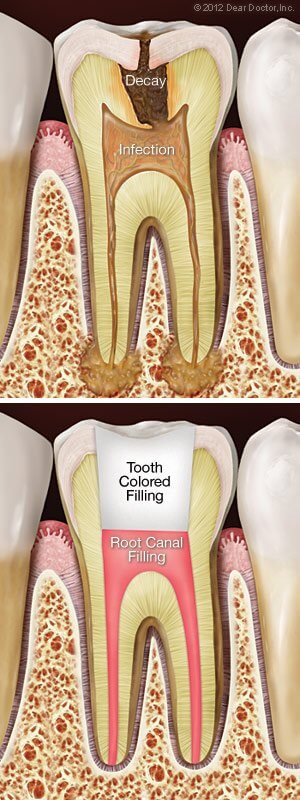
The “Root” of the Problem
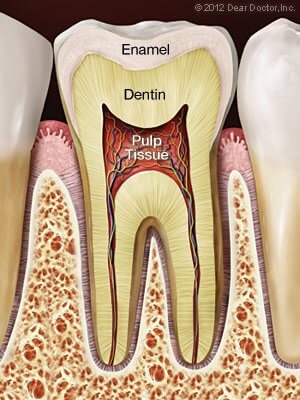
Root canal treatment. What could cause the pulp tissue to become diseased and lead to root canal problems? One potential source of infection is untreated tooth decay, which can allow bacteria from the tooth’s surface to work its way deep inside. A crack or fracture in a tooth could offer another pathway for microorganisms to infect the pulp.
Dental trauma — from a sports injury, for example — may also damage dentin or pulp, or expose it to infection. Extensive dental procedures (such as multiple fillings or restorations on the same tooth) may cause trouble; occasionally, even
There is also retreatment, or a retreat. This is when a tooth has already had a root canal, but the tooth becomes reinfected, and the treatment has to be redone.
One of the more advanced and exciting areas is regenerative endodontics. In some cases, a tooth may need treatment even though the entire nerve is not dead. In that situation, only the dead portion of the nerve is removed, while the living portion can be stimulated in a way that helps encourage regrowth. That is known as regenerative endodontics.
Overall, endodontics includes a wide range of procedures, and these are just a few examples of the kinds of treatment that fall under the specialty.
When should I see an endodontist versus a general dentist?
There are times when seeing an endodontist makes a big difference, but there are also times when it makes no difference at all. Some root canals are very straightforward and simple to treat, and in those cases, an experienced general dentist with advanced training can often provide that care successfully.
One practical difference patients may notice is cost. Because an endodontist is a specialist, treatment with an endodontist will often be more expensive than treatment with a general dentist.
The more important question is when a specialist is actually needed. That decision should be based on the complexity of the case. A trustworthy dental practice should help guide that decision honestly. If a case is not well suited for treatment in a general practice, the patient should be referred rather than having someone attempt a procedure they are not best equipped to perform.
The goal is to make sure patients receive the best care, save money when appropriate, and still ensure the treatment is done successfully the first time. Some endodontic procedures can be treated very successfully in a general practice, while others are better managed by an endodontist.
Signs You May Need Root Canal Treatment in San Antonio, TX
Knowing when to seek endodontic care in San Antonio is critical. Common signs that indicate you may need root canal treatment include:
- Persistent or severe tooth pain
- Sensitivity to hot or cold that lingers
- Pain when biting or chewing
- Swollen or tender gums
- Tooth discoloration
- Abscess or pimple-like swelling near the tooth
If you’re experiencing any of these symptoms, contacting a dentist in San Antonio promptly can prevent worsening infection and relieve discomfort sooner.
How can you schedule an appointment for endodontic treatment?
If you’re looking for dental care you can trust, call us at (210) 972-0768 or email [email protected]. We’re here to help you have the smile you've always wanted!